

Esta transcrição foi gerada automaticamente por Inteligência Artificial e pode conter erros ou imprecisões.
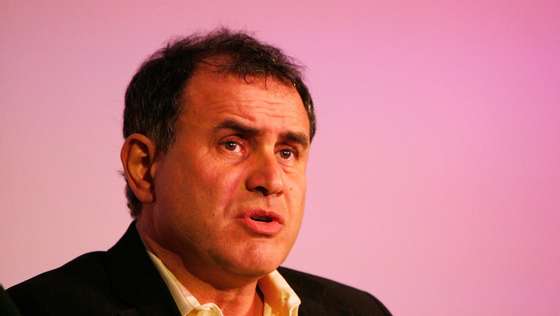
Nouriel Roubini é conhecido como o Dr. Doom, um economista visto muitas vezes como um profeta da desgraça, mas que prefere ser conhecido como doutor realista. Ganhou notoriedade quando previu que iria haver um colapso do setor imobiliário dos Estados Unidos e uma crise financeira que acabou por se confirmar com a Grande Recessão de 2008. É professor universitário, trabalhou também com as administrações de Bill Clinton e Barack Obama e agora acaba de publicar um novo livro, "Mega Threats: As 10 Mega Ameaças que Colocam em Risco a Nossa Economia e o Nosso Futuro". Foi para falar sobre essas 10 mega ameaças que entrevistamos Nouriel Roubini remotamente, uma entrevista que pode ouvir a seguir em inglês e que poderá ler na íntegra no site do Observador. Your most recent book is titled "Mega Threats: Ten Dangerous Trends That Imperil Our Future, and How to Survive Them". Good morning, Professor Roubini.
Great pleasure being with you today.
Thank you. A common thread that I found among most of your mega threats is the issue of excessive debt that was built up due to interest rates that were too low for too long. What is this debt trap that you speak about in the book?
Yes, as I point out, for the last few decades, there has been a build-up both of public debt, debt of government, central, local, and not only official debt, but there are now implicit liability coming from aging of population and the fact that our pension system and healthcare system for the elderly are pay-as-you-go. The payroll taxes of the young have to pay for the benefits of the old, but now the number of younger people and labor force is shrinking, the number of the elderly is rising. So in addition to the official debt, there is even implicit debt or unfunded liability.
Which is even more, which is many times more.
Yeah, absolutely. Even greater than the official public bonded debt. There's also a build-up of debt of the private sector, household, corporation, businesses, banks, shadow banks, other financial institution. The average for the world has gone from 100% of GDP in the '70s to 200% of GDP in 2000 to 350 last year. In advanced economies, more like 420% of GDP and rising. And it creates a debt trap in many dimensions. While debt ratios were high until recently, debt servicing ratio were low because interest rates, even the Eurozone, were zero, if not negative on the short end. Long bond yields were low, credit easing. In Denmark, mortgages had the negative nominal yields. In all over the Eurozone, trillions of dollar equivalent of public debt had a nominal negative yield. That party now is over, because now with inflation rising, of course, the ECB and other central banks are increasing interest rates, so the borrowing costs for mortgages, personal loans, credit cards, auto loans, business loans, corporate loans, and that of the financial sector, and of course, of the government is rising. So one of my concern is that those institutions, private and public, they're called zombies, meaning they were insolvent. They could survive when interest rates were zero or negative, but with rising interest rates, they will be under increased financial distress. So globally, I see many parts of the world with severe debt problems are going to lead to insolvencies, defaults, and debt crisis of the private and public sector, if not of entire countries.
You write at one point, quote, "Now we are trapped and no solution is painless." End quote. For the ordinary citizen, the impact of this and the implications of this mountain of debt can be sometimes difficult to grasp. What exactly does this mean in practice? You mentioned defaults, but what in practice does this mean for our children and even our grandchildren?
Well, for our children and grandchildren, the problem is when you issue public debt, you're essentially doing it to finance spending of the government in current times, but that debt has to be serviced. So it's a liability you're giving it to your children as well, and then eventually they'll have to pay by raising taxes or cutting spending or higher interest payments on servicing that debt. The implicit debt is even more of an intergenerational conflict because they are financing the benefits of the elderly, current elderly, or soon-to-be old, healthcare and pensions with taxes and payroll taxes on the young. But if the number of young people is shrinking, the number of old people is rising. By the time the current young people in a few decades are going to reach old age, there is not going to be enough money to pay in full their pensions and healthcare and so on. So again, it's an implicit debt that's going to squeeze the resources and the wealth of the young people once they're old. So there is this intergenerational conflict within young and old that is going to be a source of stress and tension.
So how do we fix it, if there is any way to fix it? In your book, you also point out that you want to have the authorities and the individuals sort of wake up to these problems and find a solution if there's still time. What can be the solution without breaking the social contract?
Unfortunately, you have to make tough choices. If public debt is too high, you have either to decide gradually to reduce public spending, and you have to pick and choose which part of society you help and which one of them you don't help. You have to reduce transfer payments to the private sector, and you have to pick those that you think deserve it the most, the more vulnerable, and not give across the board the subsidies or transfers to the wealthy or to big businesses. You have to raise taxes, and whether you raise taxes on capital or labor or different sector of the economy, it also has distribution effects. And for implicit liability, the tough choices are that either you increase the retirement age, but those that are soon to be retiring and the young will have to work much longer, they're not happy with that. You may need to raise payroll taxes on the young to support the current benefits of the old. That's not going to be very popular, or you have to cut the benefits of the current elderly. And again, that's not politically popular. So governments tend to kick the can down the road, and these pension reforms do not occur because they're politically very difficult. You're going to make unhappy either the young or the soon to be retired or the old.
But you can only kick the can down the road to some point, can't you? Will there be a day of reckoning?
There is a day of reckoning because until two years ago, we had zero or negative rates, quantitative easing, credit easing, long-term interest rates were low for the government and the private sector. But because during the global financial crisis and the beginning of the COVID crisis, we had a demand shock, and you had deflation, reflation, and therefore, you could do a massive monetary, fiscal, and credit stimulus. This time around, things are different because the supply bottlenecks, external shocks, and loose monetary, fiscal, and credit policy have led to inflation, and the economy is slowing down, going into a recession throughout Europe and advanced economy, but central banks now to raise interest rates to fight inflation. And therefore, fighting inflation, first of all, is going to cause a recession, whether it's going to be mild, short and shallow, or more severe, open to debate. But in addition to an economic kind of pain, there's also financial pain, because increasing interest rates is going to increase the debt servicing cost for household, businesses, corporates, financial institutions, government, entire countries, and those who are too much debt, whether private or public, may be in financial distress. They may go bankrupt.
Mm-hmm.
The zombie institution, private and public. So when central banks raise interest rates, not only they cause the risk of an economic crash, they also have a risk of a financial crash. Last year already, we saw stock markets going down, bond yields rising, spreads and cost of borrowing for the private sector rising. That type of pain, as you keep increasing interest rates to fight inflation, is going to become even more severe. And an economic strain makes the financial stress severe more, and a more severe financial stress make the economic contraction more severe.
Mm-hmm.
So there could be a vicious cycle between economic contraction and financial distress.
Excellent. But just going back, you have a whole chapter on the demographic challenges. Portugal has one of the lowest birth rates in Europe. How high do you think this should rank among policymakers' priorities, and is there anything that can be done to change this?
Well, in the past, when you have these demographic problems that reduce potential growth and increase unfunded liabilities, either you do pension reforms that are painful, or part of the solution was inward migration. Now, the bad news for Europe is that there's been a bit of a backlash against overall migration from outside of Europe. But now, in the specific case of Portugal, Portugal has benefited from having people coming into Portugal, say, digital kind of nomads and others. People who actually have good economic skills, and they can contribute actually to economic activity, entrepreneurship, business, raising outputs, and revenue for the government. So migration is a part of the solution. Portugal has been welcoming. Europe overall and US is becoming less welcoming because worries about people from outside Europe affecting negatively stuff. But even in the case of Portugal, now some of the locals say home prices are rising, rents are rising, there's a crowding out of public services, whether that's housing, healthcare, schools, and you name it. So people are protesting because they feel they are being crowded out by wealthier global nomads creating local nomads. So there is a bit of a political resistance to it. Of course, the solution should be to increase the stock of housing, the stock of a variety of public services, because I think these digital nomads and other entrepreneurs will benefit Portugal in terms of greater economic activity, labor supply, economic growth, entrepreneurship, foreign direct investment. But you don't want to crowd out, of course, the local population. So you have to find and manage this inflow in an intelligent way. Even some of these global nomads are complaining and saying there's too much bureaucracy. Yeah, there are tax incentives to come to Portugal. We come, but then once we have to set up business, it's more complicated and finding actually good childcare and good healthcare and other things is not as easy. So you have to manage it by increasing the supply of a variety of infrastructure, private and public, so that you make the process one that makes everybody, both locals and the migrants, better off.
Mm-hmm. I can see that you still keep a close eye on Portugal. Of course, we've been staying away from the headlines in comparison to those, the early part of the last decade. But what's your overall view of how the country is doing, apart from what you just said?
The country is doing quite well. Has been attracting a lot of people, of course. Beautiful country with natural resources, can be and has been increasingly, so a magnet for tourism. That was restricted during COVID, but now people are coming back. But it's more than tourism, as I said, a country where it used to be cost of living cheap, good housing, good weather, good infrastructure. And technology entrepreneurs and other people from Europe, US, have come. I think that's a boost to the economic growth and the success of the country. Those are the positive. But there are also many constraints. Of course, you have high public debt. You still have high deficits. You have rise in borrowing costs because of now inflation being high. Inflation has been eroding real purchasing power for the locals. You have to invest, not only in getting smart people from abroad, but the education, the skills, the human capital of the local. Human investment is important. Human infrastructure, physical infrastructure, private, public, and others. You may have to make your labor market more flexible, educate your people in ways that make them able to survive and thrive in a global and digital world. Reforms of a resource that increase potential growth, use intelligently the resource that are going to come from the EU, cheap loans and grants, through the recovery funds for increasing the green transition and the digital transformation. All these things are going the right direction, but maybe too slowly compared to what's desired and optimal. You have to increase the productive capacity of a country so that potential growth is higher. So you have to do a lot of work. You're in a good spot, but of course, in the short term, there is a risk coming from high inflation, rising interest rates, growth that was 6% plus last year. Even your governments and central bank expect to be only one and a half percent. I worry it's going to be even less than that, not because of Portugal, but because of the impact that the global contraction and the European contraction is going to have even on a stronger economy like Portugal. So I think growth could be closer to zero rather than being slightly positive under some negative scenarios and so on. But as long as you invest in your people, into your capital, your infrastructure, medium, long-term, Portugal can remain a success story that attracts foreign capital, foreign people, and attracts also domestic capital and quality of their own population. So it can be a success story over the medium term, even if it'll be bumpy, if not rough this year.
Mm-hmm. Yes, but thinking back to the Troika years, and you were looking at Portugal and Greece and Spain and all these countries, do you think that we made the most of the good thing about the program, or did the bad thing about the program harm our future prospects?
Well, those were difficult years after the global financial crisis. There were excesses in the private and public sector. You had to tighten your belt. There was economic difficulties, financial difficulties. Portugal followed its own way. On one side, did austerity but moderate, and then did the intelligent versions of fiscal stimulus. It benefited from the ECB having very loose monetary policies for a while, but it became also an attractive source of foreign capital and foreign people as well. So sometimes actually you need a crisis to change. That's why countries that were ranked very low during the global financial crisis in terms of overall competitiveness and attractiveness, recently, countries like Portugal, like Greece, even Spain, have been ranked actually quite positively in terms of some of those ranked things of competitiveness and desirability and quality of living as well. But you cannot take it for granted because the easy times of easy money, cheap money, cheap credit, and loose fiscal policy are behind us, and there are the kind of mega threats I worry about. Where there is geopolitical tensions, where there is de-globalization, where there is restriction to the movement of factors of production and trade across the world, aging, climate change, risk of pandemics, risk that eventually AI, robotic, automation, machine learning might displace many jobs unless you have skilled workers, social risk of various sorts, and economic and monetary and other financial risk. They're common to Portugal, to Southern Europe, to Europe, and to the world at large. So I think that everybody has to address these mega threats. We live in a world in which everybody's interconnected. Even if you do the right thing, bad policies by other country can damage you, and you're a small open economy that depends on the success of the world, so you're not a insulated island. You'll survive and thrive as long as the rest of Europe and the eurozone does well as well.
Very good. On the topic of rising interest rates, in Portugal, most homeowners have variable rates on their mortgages, not fixed, but floating rates linked with EURIBOR, and also a problem for the companies as well, the way they're rolling over their financing. Do you think that the fact that this quick rise in interest rates and market rates has become a great concern for families? How much higher do you see rates rising in the Eurozone, considering that some families are having sort of €300, €200 raises in their monthly payments just by servicing the debt? How high do you see the rates going?
Well, the ECB has normalized rates, but it's not yet gone into restrictive territory. The best scenario might be one in which they do only another 50 basis points of rate hikes, and they stop with a deeper rate, now at 2.5%, at 3%, and they stay there. It's still painful because the rise in short rates for those who have variable rates, mortgages, business loans, credit cards, personal loans, auto loans, you name it, implies significant increases in debt servicing costs. There's a risk scenario that inflation remains more sticky than what the ECB and consensus says. If that were to be the case, and there are many reasons why that could happen, then it's not enough to go to 3%. You might need to go to 3.5% or even more than that, and that pain is going to become greater. So if you are a household or a business, you have a triple shock. One shock is to essentially your income. Slowdown of economic activity, inflation higher than wage growth implies your real income is falling, real wages are falling, and if there is a recession, you may lose your job. So if a shock to your income, your P&L, profit and loss balance sheet, then there is a shock to the asset side of your balance sheet. Stock prices have fallen, home prices will start to fall, the value of many other risky assets has go down. Many young people were playing, they trading meme stocks, crypto, all that stuff has crashed. Tech has crashed even more than traditional stocks. And on the liability side, if you have a lot of debt, personal business and so on, your debt servicing ratio are rising. So it's a triple whammy, a shock to your income, a shock to the value of your assets, and a shock to the debt servicing burden of your liabilities. Some households, some businesses are more resilient, stronger balance sheet, stronger P&L. Some of them are more fragile, and those more fragile are going to be under economic and financial distress.
One of the threats that you see is the risk of new pandemics. What do you think this pandemic, COVID-19, assuming it's close to the end, or maybe it's not, but assuming that we can have sort of this type of episodes in the future, what do you think policymakers learned from the experience, and about the economic impact of the measures that were taken? Do you think that there was a little bit of overreaction and little consideration for the economic impact? What do you think the lesson has been learned?
Well, the first observation I'll make is, unfortunately, pandemics may become more frequent and more virulent. With the Spanish flu, 1918, and almost nothing until 1980s. Since then, we had HIV, SARS, MERS, swine flu, bird flu, Zika, Ebola, COVID-19. It's only a matter of time we're going to have COVID-23 or 24 or something else. And there are new variants, actually, of Omicron and others that may be actually quite virulent. So this war against COVID has not been over. And the relation between global climate change and pandemic, as we destroy the environment, those animals that carry pathogens like pangolin, bats, and others get closer to livestock and human. Therefore, the zoonotic transmission from animal to human becomes more frequent. That's why from the 1980s, we have had dozens of new pandemics, and we didn't have any between the Spanish flu and the '80s. It's climate change related, and as we destroy the climate, more of it is going to happen. So unfortunately, we have to prepare not only to deal with the current one, but also with new ones. There's a trade-off between saving lives and saving incomes. I think in the early stage of the pandemic, when we didn't have yet the immunization and so on, we had to shut down economic activity, even if it was painful. And then once we got closer to people being able to manage, ride the curve, and of course, finding the vaccine that gave some immunity and protection, we could reopen economic activity. No country did it exactly perfectly right, and there are 200 different experiences. And we'll have to learn the lessons on whether when the next time arrives, how much of a lockdown, as opposed to how much of trying to avoid the economic pain that came from the pandemic. I don't think there is a very clear answer, and everybody will have to study the science and what happened to figure out those kind of painful trade-offs that have to be kind of observed. But there'll be lessons learned, and probably the lesson is early on, probably you have to still lock down, but then you have to reopen fast enough while giving protection to people who need protection. I think the lesson is pandemics are very expensive, so it's better to invest into preventing them spending money nationally, European, and globally, because the next one is going to be as ugly, and the cost exposed fiscally and in terms of economic contraction, where trillions of dollars, if we'd spend even $100 billion in trying to prevent it, the benefits would be huge compared to trillions of dollars of cost. So for other diseases, the best policy is prevention rather than curing it, because curing something once you're sick is always expensive. And can we find ways of making sure we prevent the next pandemic from occurring? There are ways if there is more global cooperation. Unfortunately, the lesson of COVID is global powers are fighting each other on geopolitical issues. They cannot cooperate on anything, not even on issues of global health. Everybody was essentially doing it by themselves. Unfortunately, we had no global cooperation, and that made the COVID worse.
Mm-hmm. One thing that's very clear when you read the book is that most of these mega threats are very much interconnected among them with each other. When you put all these mega threats together, what image comes to your mind as some image or metaphor that you could use to describe the state of the world today and the risks in the future?
Well, the metaphor is, it's like a vicious circle when each one of these things feeds on each other, you have a negative feedback. One threat affects the other, makes it worse, it makes the other one worse, and you go into a funnel where things becoming deeper and deeper and worse. So you have to break that kind of a negative cycle to go to a more virtual one. So it's a world of interconnected mega threats. I call it mega threats, other people call them polycrisis. The head of the IMF called it a confluence of calamities. The point is they're not separate siloses, they're all feeding on each other. So it's a combination essentially of contagious crises that affect each other. So it's really a form of global contagion of threats. Maybe that's a way to think about this.
And one of the aspects that you highlight in the book is the environmental risk with climate change, which you've already mentioned in this interview. You've written that the new greenflation is already in full swing because it turns out that amassing the metals needed for the energy transition require a lot of expensive energy. What do you make of this situation and the ESG goals and stuff that we keep hearing about every day? How is it impacting our society?
Well, on global climate change, unfortunately, there is excessive amount of greenwashing, greenwashing, green fig leaves, but also what I call greenflation. To produce the green metals needed in electric vehicles, batteries, and you name it, you need a variety of green metals, whether it's lithium, cobalt, zinc, copper, that require today a lot of energy. And if that energy is highly expensive fossil fuels, then the cost of producing this green metal is higher. And this year, by the way, my worry is that we'll have a spike in commodity prices, because in the last years, there has been massive underinvestment into new capacity. New capacity certainly of fossil fuels because we've been bashing big oil by saying, "You pollute," and rightly so. They're underinvested, but the ramp-up of production of renewable has not been fast enough, so there's not enough supply. The same kind of underinvestment in capacity has occurred for other industrial metals, has occurred for green metals, has occurred for rare earths. And by the way, since US has started a tech war against China, most of the production and the refining of some of the rare earths that are needed in semiconductor, electric vehicles, electric batteries, is done by China. And China could actually retaliate against restriction of exports of chips and chip production machines to China by restricting exports to the US and the west of these rare earth and other metals. So the geopolitics may make even more expensive the cost of producing some of the green metals we need for the green transition. So that's one of the many bottlenecks for the green transition.
But with protests like the Dutch farmers, what do you think these protests such as these tell you about the social costs that come with achieving these goals?
Well, there are a variety of anything of the reform you're needed with climate change or other ones imply costs in the short run and benefits only in the medium long term. So take climate change, if you're imposing higher carbon taxes to do the transition, that hurts people, and governments don't impose them and actually reduce fuel taxes today. That's the opposite of going in the right direction. There are conflicts between, especially in the US, but even parts of the West, because between those who don't believe in climate change driven by human, Republican Party, US, when they're in power, they do nothing, and those who believe in it. There are conflicts within young and old. The old are not going to be around the next 30 years. The young are going to live for another 60, 80 years. The young don't vote on average. The elderly vote, and who wants to pay for the cost today of benefits that are going to come in the long term. Globally, if a country does all the pain and effort to reduce its net emission to zero, nobody else does You get all the costs and none of the benefits, and coordinating 200 countries is impossible. It's a conflict between rich and poor. Rich are telling China, India, the poor, cut your emission to zero, like we do in the next 20 years. They say, "You created this problem with the Industrial Revolution. 90% of all historical stock of emission is you. The new flow is coming from China, India, emerging market. But we're still poor. We're going to increase our emission for next 20 years. We're not going to stay poor unless you bribe us by giving us trillions of dollars of subsidy that the West is not willing to pay." And then in the world of geopolitical conflict, US and China cannot agree on how to deal with pandemics, health, economic stability, financial stability, trade, security globally, and so on. They cannot agree on climate change either. So we live in a world in which there are six, seven different types of constraints on doing the right policies to achieve a meaningful green transition. Some are domestic constraints, some of them are international. But that's why we keep on kicking the can down the road, and the economic and financial damage of climate change is becoming worse by the day. Floods, droughts, fires, desertification, rising cost of food, of energy, sea level rising, hurricanes, typhoons. The damage is getting worse and worse by the year. It's not a problem for 20 years from now. The damage from climate change is today.
We've talked a lot about these great threats in our future and about how policymakers should address these issues. But on an individual level, how should we look at these challenges, and how will reading your book help us individually in facing these threats?
Well, many of these problems are also collective, so they need collective action. But individuals in their own small can make differences. We can all change our carbon footprint. In ideal world, everybody will become vegetarian or vegan, because a quarter of all greenhouse gas emission come from livestock. Agriculture, that's painful, but you should go to supermarket and use a reusable bag rather than get the plastic bags. You should care about step-by-step your daily life using solar panels and others to change and reduce your carbon footprint. If you're a young person, you're not going to have a job for life. AI, machine learning, robotic automations, they disrupt individual jobs, entire industries, sectors, and firms. So you have to be nimble to be able to survive and thrive in a world that's going to be hyper digital. Means probably you have to study in college or university some STEM, science, engineering, technology, math, computer science. But you also learn liberal arts because you'll have to think critically, know how to read and write well, to be flexible and change jobs over your life. So a combination of technological skill to understand how technology affects the world and traditional liberal arts. In terms of your savings, too many young people think they can become rich overnight. They do day trading on all of these platform like Robinhood. They trade in crypto. This a total scam. Meme stocks, SPACs, and so on, and 99% of them lose their shirts. No one has become rich overnight. One of them do one million, loses their wealth. You have to study hard, you have to work hard, you have to retrain yourself, you have to learn over your lifetime, you'll have to be flexible, change jobs. You have to save even if you don't have enough income, 10, 20%, because Social Security and elderly healthcare is not going to be fully available to you. So you need also private sources of saving. And when you save every year and you invest in a diversified portfolio of European, US, global equity, safe assets, more risky assets, maybe you can get an average of 10% over the long run. Long run means saving for 40, 50 years, and you're going to retire not at 60, not at 65. Life expectancy rising. You have to get ready to retire when you're 70 or even 80, and so on. So you have to really, it's a marathon, life. It's not a sprint. And either you are prepared for a marathon and you survive and thrive, or otherwise you're going to be left behind and you're not going to really be able to survive. In this world, there will be mega threats. So there are things you can do individually, but of course, you have to also collectively, whether it's political participation, social society participation, nonprofit, charities, whatever. We survive and thrive because we're in the same boat. So we cannot resolve our problems individually. We also have to have social capital and care about our own community, our own society, about villages, town, countries, and world, and together work towards policies that are going to make it a better world rather than a worse world.
Professor Nouriel Roubini, thank you for taking the time to tell us about your new book and sharing your view on how we should deal with these mega threats as a society and also as individuals. Thank you very much for your time, sir.
Thank you for being with you today. It was a great pleasure and honor. Thanks.
Thank you.