

Esta transcrição foi gerada automaticamente por Inteligência Artificial e pode conter erros ou imprecisões.
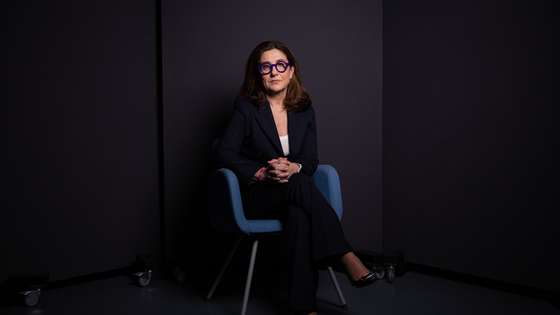
Estamos aqui com Christine Ourmières-Widener, que foi presidente executiva da TAP entre 2021 e 2023 e que foi afastada pelo governo do PS, na sequência da indenização paga a uma ex-administradora. Christine, hello, welcome. You have remained silent for two or three years after leaving TAP in 2023. Why have you decided to speak now?
Thank you so much for being with you today. I think that after three years, and I did an interview one year after my departure, focusing a little bit too much on form more than content. So for me, it was the right time to make sure people understand or reminding them the facts, and with a process that didn't see any progress. So, the right time to come back on the facts more than anything else.
What is the status of the legal process and legal report?
I will not comment, but no progress so far.
So nothing happened after you have filed a lawsuit against TAP, right? You made a claim for €5.9 million in damages, and nothing happened since then?
No, nothing happened since then.
Did you try to negotiate a settlement with TAP?
Yeah.
Is it possible to have a settlement?
Well, in the corporate world, is always possible to have discussion and settlement when you want a conclusion.
But you are willing to have a settlement?
I was always open to sit around the table and to find a conclusion, because for me, is one of the reason I'm speaking today, is because after three years, there is no conclusion. And I think it's very difficult to see that after three years, you didn't reach any agreement or any conclusion following some events that were not easy for anybody.
But for this time, is there a negotiation going on?
There is no negotiation going on.
And TAP is not interested in negotiate. You have approached them?
I think it's about TAP to answer to this question.
But you have tried. I believe your side has tried.
I think it's more than in any situation like this one. It's possible. So, as of today, nothing happened so far, so that's something that would be great to see changing in the future.
You try to talk with TAP only or with the government?
I think the trial, that the process today is with TAP. And again, TAP has to answer on their position.
In addition to that civil lawsuit, there is an investigation by the Public Prosecutor's Office in Portugal regarding the payment of a compensation to administrador Alexandra Reis. Have you been questioned about this investigation?
I've been through a lot of different steps during this process. I've been meeting a number of parties. The only thing I can tell you is that the facts are obvious. This process has been dealt with lawyers that I was relying on. These lawyers were the lawyers who've been working for TAP for years. And these lawyers have been advising me, and I was trusting them to advise me to do the right thing.
But you have been talking to the prosecutor about this case. Have you been called?
Not recently.
Not recently.
Not recently. But I think that I'm open to any questions. But I think the facts are that I only relied on expert advice that were the most well-known lawyers in the country. So, and for me, as a non-Portuguese, I know that some people would expect a CEO to know everything. But in the corporate world, if you want to be a true leader, you need also to rely on real experts in their fields. And when you need to deal with complicated processes or sensitive one, you need to rely on real expert, and this situation was lawyers that were absolutely competent to advise a CEO of a national company.
You base your defense in that claim, the defense in courts, the arguments are that one that you gave?
I cannot really comment on the process, but I think that everything has been said, filed, but I cannot really comment on the legal process.
Let me ask. You asked 5.9 million in that damage claim. What is the basis for this amount?
Well, again, it has been explained, it's a combination of a number of things, but what is important is to say that, for me, this process is not about trying to find a new explanation in the legal process, is to make sure we go to a conclusion and that the facts are reminded. The fact that this process was managed with experts. The fact also that I went to Parliament to explain the facts, the fact that a lot of things has been said that are not true, trying also to damage my reputation. But I think that reminding the facts that all has been done according to the advice that were given, and that's why we Today, I'm trying to come back on what happened really, and to make sure that people are aware of it. What was also for me a surprise is after my last interview, the wiretaps that were published of the Prime Minister talking to the Minister of Infrastructure. It's like a-
You mean the former Prime Minister?
The former prime minister
António Costa.
It was not really doing the big news, but it was proving again that I was a political shield or human shield, as you want to call it. Because it was not about my competence as a CEO of an airline. It was for the government to use me as a political shield in a difficult time for them. And that also was for me surprising that to see more news about these wiretaps that were also accepted as a proof in all the process. So I really thought after the wiretaps published officially that it would be a progress in the resolution.
In the lawsuit that you presented, right?
But so far nothing happened, so that's why I'm here today.
But do you see yourself as a political victim?
Well-
Mainly?
... what was said as a conclusion is I see myself as a political shield, a scapegoat on a situation that nothing to do with my performance. I deliver the best result of the company. We did very difficult things when I was CEO of TAP, changes, transformation that were prerequisite to any privatization that today is possible. Why? Is because we did very difficult things, such as dealing with a run for situation, dealing with also maintenance in Brazil, that were really two main priorities for the government to solve before any process. It's very difficult to, let's say, to have a very successful process with a weak airline. When the airline is much stronger, when the structure is more readable, the position of TAP today is definitely much stronger, and I think it's good for Portugal. It's good also for the Portuguese citizen because a lot of money has been put in the company. But without these changes, these transformations that were not easy, it would never be possible.
Let me go back a little bit to the part of the claim.
Yes.
Because you said this was a political issue.
Yes.
However, your claim was presented against TAP-
Yes
... and not against the government.
Because-
Why didn't you try to challenge the government decision because it was a political decision to fire you from TAP?
Because my employer was TAP. So my, the employment was with the company, and it's logical when you have an employer. So I don't see me different for any other citizen in Portugal working for a company and at some point losing a job, and the condition of my departure were very unusual, let's say. And the responsibility of my employment was with the company.
There's another criminal investigation involving TAP, which I don't know if you're aware, because it has arised during your mandate at the company. You have heard about Airbus funds-
Mm-hmm
... and the deal that was made during the time that TAP was a private company. And during that, there was an investigation and audit, I think, that your administration asked for.
Yes.
Foreigner companies that said that TAP was paying more, was suffering from this agreement made by the former investor, David Neeleman. Do you know anything about it, that investigation? Have you talked to the officials about it?
No. I don't have any more information. The only thing I can tell you is that when a CEO of a company like TAP, and it's a long history.
Yes, a very long story.
Very long history. And the country is very proud of the airline, and I think there's a reason for that because of the role TAP is and will play for the country. You need to understand exactly what happened, and all the reason, et cetera. So my administration decided to ask for an investigation, of course, with the approval of the government, because no big decision, strategic decision are made in a company like TAP without the approval, and more than the approval, the discussion and the exchange with the only shareholder. So the investigation was also for the country to really understand what happened and where different interest. But of course, this investigation are really long. They need a lot of documentation, and-
And they have to ask information from Airbus, which is not easy, right?
So they have to ask the information from all the parties. And as you can imagine, I don't have any update, and it's TAP who-
But it was a bad deal that the former-
No, there were questions. There were questions. So it's very difficult without investigation to give an answer like that. And I think that the shareholder had questions. They didn't get all the answer. So the idea was to make sure we had all the facts in place, a full transparency, because there are many parameters that could really impact After that, what you see when you are in the company, because you don't have the history and not everything was available documents, etc. So it's just like any investigation, is very important to wait for the conclusion.
But for you as a former CEO, for TAP is better to have the neo aircraft or the 350?
I think that is a very difficult question to answer. Airlines are all about the network they have to serve. So I cannot answer this question. It depends really what your network strategy is. And I don't have the knowledge today of the strategy of the network of TAP because it has been evolving, so-
Yes, but when you were CEO, you preferred to have the 3500 or the neo aircraft?
I think that again, when I arrived, the network was already a strategy based on the type of aircraft that was acquired. So it's a question, okay, if your strategy at some point a network, you don't change it in one day. So I think that the network already was reflecting the type of aircraft we were flying. And again, if the company is moving to another strategy, maybe it will be a different choice. But the investigation was broader than that. It was a type of aircraft and the cost, and hopefully one day you will have the conclusions.
Even before what will become known in Portugal as Alexandre Reis case, your management was criticized publicly. There were a lot of news coming out in the newspapers, you must remember that, focusing on negative aspects. Do you think you would be able to remain at the end of the mandate in TAP if it wasn't for the Alexandre Reis case?
I think that my mandate was very difficult, and I knew that from the beginning. And when you give to a top management difficult task, it's difficult to be 100% popular with everybody. I knew that from the beginning. Doesn't mean that I didn't want to be popular. Of course, everyone wants to be, but I had the mission. The duty was not easy, and when I joined TAP, the first task was to have the restructuring plan approved by European Commission, was to be approved when I joined, it was not. And it took us six months in parallel to get the plan approved, and it was not an easy process. And I had to bring experts that came to support TAP because we had-
Foreign experts
... foreign experts, because these processes are very technical and you need a technical expert to deal with the subject that are quite core to the European Commission. They are not only financial, they are like slots in Lisbon where one of the subject, and you need really to have the experience, having done it before. So we brought them and then they left. Okay. And it was good because at the end, the deal was feasible and you need to have a plan that you can deliver and that is not hurting the airline for the country, and also for the position of the airline for the country in the airport. So that was the first part, and it was difficult because at the same time, we had to manage the company, and we need to start to deliver.
And you made some inner enemies, enemies-
Well-
... inside the TAP
... inside TAP, when you have salary cuts that are so big, is difficult, as you can imagine. But we didn't have the choice. It was a mandate. It was a plan, and the government was adamant to make sure we were not deviated from the plan. So that was my mission. It was absolutely not easy, was demanding, and of course, not everybody was supporting the salary cut, for instance, all the savings we had to do. But we had to deliver the plan.
So what was more difficult, to deal with the European Commission, to deal with worker unions, or to deal with government?
It's very different. I think the European Commission, they have a methodology. So you can expect what they ask.
They're predictable.
Absolutely predictable. So because they have rules, you need to work by the rules.
So what was more difficult, the government or the worker unions?
It's very different. Government is a shareholder, so they wanted to be aware what was going on for the main subject, sensitive subject, strategic subject. So it was very intense, as it should be when you are in a crisis every day because decision have to be taken, directions, reactions, understanding. But it was a very professional relationship, but very demanding, and as it should be when you have to make sure the decision are the right one. From unions, I think it was very intense, too, for a different reason. When you are in a situation when you have a significant salary cut, it's true that the unions, they are always trying to get more or to have salary cut removed before what was in the plan. But my mandate was very tough because I didn't have any room. We signed an agreement with the commission that was asking the company to keep the salary cut for a period of time. And the government was definitely willing, like the executive team, to be delivering what the European Commission was asking for. So doesn't mean that we were not understanding the ask because we had a long discussion. I think I always been spending a lot of time with them, always available to explain the situation and to explain where I was coming from.
When do you feel that you lost the confidence of the government? When? At what time?
Well, I think it's an interesting question. I'm not sure I lost the confidence.
Not even at the end?
Because till the end, there was never been any doubt that we were doing the job, and we were doing the job asked by the government. So we didn't deviate at any point from what the shareholder were asking us to deliver. So it was not about our performance, our confidence that we are delivering the plan. It was a political situation that really pushed the government to decide what they decided. But the confidence in our capacity to deliver the plan, the proof was the result of TAP of '22 were amazing. Everybody was surprised. Even if I could not be part of the presentation, that didn't happen for obvious reasons.
You were forbidden to make the public presentation at the time?
Let's say that the fact to have presentation was not something that was planned. It's a way to say it without saying it, so we did presentation every term. For this presentation result, we didn't do something public. But at the end of the day, it's a decision. For me, the way you manage it should have been-
It is different in a company decision, not a government decision-
Well-
... to present or not present the results, right?
It's a company to decide, but it was a very difficult time. So I think that decision were difficult to be taken in a very... It was turmoil and a lot of noise.
Who disappointed you more at a personal level in the government?
As a CEO, you have to be very careful to not take anything personal, because if you start to do that, it's difficult to thrive and to progress in your career. I think that you have, with experience, a capacity to take some distance and maybe to understand a little bit more how people take decisions. I'm not a political animal. I will never be, because that's not who I am. So my decision are taking based on facts, or based also rely on experts, and I like to see performance. I like to see people delivering what they are supposed to deliver, take responsibility. So when after that you leave a company, it's a past, and I always want to see forward and what is next in my life, being personal or business. But taking personal, judging people, it's difficult because you don't know their life. You don't know why they are taking decision because you're not in their brain, in their head. So what I want to say is that it's very important to stay very factual in anything you see and decide.
Do you still follow the TAP-
Of course
... environment? How do you see the current financial and the operational evolution of TAP?
Well, I think that TAP is still making a profit, so I'm very happy to see that we were able to put TAP on good tracks with good foundations that are still in place. After that, it's a very difficult environment, and I hope that TAP will continue to improve their margin and that the strategic process they are in will progress. So for me, I wish TAP all the best.
But TAP is able to keep profitable with service public routes, some service public routes, and outside mainly airline group. Do you think it's possible for TAP, for a small company like TAP?
Well, I think that the strategic decision today is different, so that's the decision that was taken by the shareholder, and they were very clear how they want to proceed.
It was a decision that was taken in your time as well, right?
Exactly, and I was the one initiating the-
To the privatization
... the process with the government. So I think this alignment is very important. After that, the conditions, the discussion, what will be the form of a shareholder agreement. So that's something I'm sure that the shareholder will make sure that they are checking everything that is important for the country.
You have worked a little bit on the privatization process. Which one of the big three European groups that are interested in TAP would be the best fit in your view?
You're not expecting me to answer this question.
I'm expecting you to give us some cues of what would be important to-
What would be interest. I think that the shareholder have identified the key The key elements, and they will take decision. Will be difficult for me to comment because it's very sensitive.
Mm-hmm.
But I wish that for any decision, it will be the best for future.
Were you surprised that there were only three European competitors? In your time, you were expecting to have investors from other parts of the world outside Europe?
So there are some limitation where you have to be a shareholder of a company.
Yeah.
And if you're not European, so that's the main, I think, fact, and let's say that is not allowing outside of Europe other airline. But as you see now, the group in Europe doesn't mean that maybe in the future with any of these three groups, you cannot have partners. See, for Air France KLM with Virgin Atlantic and Delta, so it's a very diverse structure. And the same with IAG, where you are on the stock market. So when you are part of a group that is on stock market, then the parties, the capacity to invest are very different. So saying that it's what is really I think the most credible scenario doesn't mean that moving forward it could not evolve, and that will be the choice of the future shareholder with the government.
You wrote an article in newspaper "Expresso," and I will make a quote, "A life, and it's true, that remains suspended while the system hesitates." You wrote that. When you went to courts to Portuguese justice system, you were certainly warned that the process in Portugal would take years. Why do you say your life is on hold?
First, I think that it's not because it's common knowledge that you have to accept it. Justice that doesn't decide, in fact, decides by not deciding. So I think that for any event like this one, in any career or life, you want the truth to be communicated because you have some comments that have no answer, some counter-facts or not truth that are in public, so you want this to be completely concluded with the facts and justice to be made.
But you knew that it would take years to have the final sentence.
I knew it will not be imminent after that. I think that at some point there should be some progress.
And do you think you still believe in the good result, in a result that's favorable to your claim?
Of course, yes. Because I believe in the truth becoming more public, and I believe in facts being more important than the gossips of rumors that have nothing to do with the performance.
And you trust in the Portuguese system?
Well, I think that you need to trust justice at some point. After that, you can decide that the justice is not quick enough. But I think that people will base their judgment on facts and not on rumors or things that cannot be proven with document or facts.
You also wrote that it drains a professional reputation built over decades and drags down your personal plan and your family. Has your career been compromised by TAP and this whole process?
Well, if you are meeting people who don't know you, they will look on social media. They will look, of course, and they will always ask questions. I didn't have any meetings with people I didn't know from levels that didn't ask question about this process, so it's a repetitive question, "What happened? Can you explain to me?" Et cetera. So yes, it has an impact. Takes time also, so I'm not saying that its impact will be at the same level because the noise is different. But for me now, what I want to come back with is making sure people are really working on what really happened and what should be the outcome.
After you left TAP, you have been appointed to the presidency of another airline.
Yes.
I believe Air Caraibes, I think it says.
Yes.
It's a French company. Why did you left the mandate before it ended?
First, the mandate in any CEO position doesn't have any potential number of years.
Mm-hmm.
You are recruited with a mission, and the mission I was recruited for was never public because it's a private company. So I left the company with an agreement and-
But you were supposed to stay more time, or is there any kind of disagreement?
Well, for me, the reason why I stayed the time I stay, it's not up to me to communicate.
Okay.
But it was done with corporate rules, and very professional transaction.
You don't have any process, any lawsuit against the company?
Nothing, and honestly, I think I really appreciate my time, and that's it. So people are trying to use that against me, but having the responsibility of a company with a mandate in a private sector doesn't mean, first, you will stay a limited number of years. Second, there was no communication on the length of my mandate, so And the separation
It was by agreement with the company? You left with an agreement?
Yes, it was a corporate agreement, and that's it.
And are you currently working on a sector?
So today, quite interestingly, I'm a chair of a hydrogen propulsion company.
Hydrogen. Okay.
But it's still in aerospace, but not in civil aviation. And I spend most of my time, if not full time, in England, in the Cotswolds. So we are developing a propulsion system for-
For aircrafts, but not commercial aircrafts
... for aerospace, so it could be defense, it could be civil aviation. And I was chair of the board, non-executive, and I'm now executive chair, meaning I'm spending-
Because you're an engineer
... Because I'm an engineer, because I love to work on technology, because I think the future of our industry is about also electric and hydrogen, and the combination of both. And I'm a fellow of the Royal Aeronautical Society because I'm British, even if I have a French accent. I'm a fellow also of the Royal Engineering Academy. I'm a mentor of young ladies in STEM, so I have always done mentoring, and I'm spending a lot of my time, in addition to my executive support of this company, with the Engineering Academy.
Do you still have any connection with Portugal?
Friends.
And when you come here, are you recognized in the street still?
Yes.
And are people-
Even if I don't wear my glasses. Yes. I'm still recognized in the street. What I prefer is when I am recognized in small villages in center of Portugal, and that, for me, is-
What people tell you?
"We are so sorry, madam. We are so ashamed that the country did that to you."
Did you pay the fine from the court of auditors?
It was public. So for me, this process has been a real surprise, too. Let's say, to recap the facts, when I started in 2021, TAP was already a national company from 2020, so all the way to work were in place since 2020. Nobody even mentioned any process that-
When they hired you, they said you were working for a private company or a national company?
Well, I was recruited by TAP, and we had an organization with very knowledgeable people. We had a general counsel.
Mm-hmm.
That is a warrant of being compliant with the laws and the processes. So we had some brief on governance in Portugal, but then you have to go to the details, and the first day we arrive in a company, you're not expecting that the company, we are not applying the right processes. You need a little bit of time first to deal with your own commission, to deal with the operation, to deal with cost saving. So honestly, my days were very full, and you have a board, you have a chair of the board that is ensuring the proper governance of the company. So what I want to say is that the governance in place was a governance that was already there for 2020. I don't find any excuses, doesn't mean it's right, but meaning that considering that it was not understood the way we should have done things, and putting that directly to my responsibility-
But it was an internal failure from TAP to identify the fact that since they have become a national company, they would have to fill different rules than they did before
... So I think the situation was so difficult. There were so many subject to be solved. There are so many crises going on everywhere in each single department, because remember, we were just after COVID, and the company was really about collapsing without European aid, so it was about survival. And when you're in survival mode, honestly, you just want to survive by making sure you're paying salaries of your employees, you're paying the fuel. If you don't pay the fuel of the fuel company, you cannot fly. So it was really like survival. And after that, when you start to go out of the survival, you have things that have been done in a certain way.
Mm-hmm.
And then you realize at some point, with a new general counsel that is coming with fresh eyes, that things maybe have to change. But it's just a little bit like syndromes, when you have been in crisis mode for a while, where you get used to it, and you need a change in the organization to realize that, a wake-up call. And it's with the general counsel that we had a wake-up call, a new general counsel that we had a wake-up call on this to be solved. But it was very late in the process. It was after more than one year that it was discovered, so it was-
It was in 2023.
Exactly. And again, it was not in place, and now it's in place. But it was the facts that what happened, and we take responsibility as we should. But it's true that I think that more dialogue between companies and also organizations that have the responsibility could avoid Also to keep this program too long and then create huge programs. I think dialogue between different stakeholders are quite important. But again, we were moving out of the crisis and the European Commission package was for everybody, the only priority.
But related to the fine from the Court of Auditors, did you pay yourself the fine or TAP has insurance-
That covers
... that covered that fine?
These insurances is what we call a director insurance, don't cover any fine.
Okay. So you had to pay yourself.
The fine has to be a personal payment. There is no insurance that will cover the fine.
And did you pay already the fine from the Tribunal de Contas?
I followed, let's say, the recommendation of my lawyer.
That was?
Let's say, for me, it's about closure. So there are a lot of things that I've done to make sure a lot of things don't stay open, but they're still in process under study, so difficult for me to comment on this one. There is still one process still under study by the court.
By the Court of Auditors.
Tribunal de Contas.
There's still one process left?
Yes.
Oh. Do you have any connection with Portugal? Your children still studying in Portugal or no?
They never studied in Portugal.
Okay.
I have one son in London, one son now in Paris, where I live now, and one daughter and a granddaughter in Dubai. So I'm a happy grandmother.
Okay. Thank you, Christine.
Thank you very much.
Would you like to give us some more information? Something we haven't asked-
Well, I think that, uh-
... because we didn't know. We had to ask
... yes, of course. Yeah. I think for this process and why I'm speaking today is not to find any reason more than the fact that where I explained. So my performance has been shown by the result of the company. I think I've been quite open to say that I was a scapegoat, or a political shield, so as we want to say it, and the proof facts are in the white taps that were published by the government. But I think now what would be important, I think, not only for me but in general for these processes for Portugal and I think maybe to show that the country can close this subject and make sure that we are taking into account the facts and closing for good. So I think it would be good for everybody, and it would be also good for Portugal.
And for TAP.
And for TAP, because I think to attract talents. When you look at the facts, I was recruited on a contract that has then have been commented, et cetera, but the contract was approved by the government to the highest level by lawyers who knew what they did, I think. So you arrive with a contract, and then one year after, people are criticizing your contract. It's quite unusual. So you arrive with a contract, you're relying on your contract. And everything was in the contract built to be consistent with the difficult tasks that has to be achieved. So I think Portugal is a fantastic country. And I know that I will always have no problem with Portugal. It's not about Portugal, it's about-
Would you ever consider return to Portugal or TAP, for TAP, if it was asked?
It's always difficult to come back. It's quite difficult, I think. Well, we say in life, my mother always said to me, "Never say never, okay? Because you never know." But it's quite difficult, and you move on in your life. You have different expectation, you have different experiences. But I think this process to be closed for everybody. It's not only for me. I'm not here... It's just like it would be better for everybody. And then everybody's moving on. But to try to delay these processes to save time or why for? In the corporate world, you just sit around the table, you find an agreement, and people just continue to live their life and to do something else. So I think that would be the best conclusion for everybody.
Thank you, Christine-
Okay. Thank you very much
... for your review. Thank you.
Thank you.